
 返回
返回PhD. Student Yuxuan Liao’s research on large-scale optical tweezer array was published on Chinese Physics Letter.
Neutral-atom quantum computing has recently emerged as one of the most promising hardware modalities: individual, laser-cooled neutral atoms are held as qubits in configurable 2D and 3D arrays of optical tweezers or optical lattices, their internal states manipulated by tailored laser or microwave pulses, and strong, switchable interactions are induced via highly excited Rydberg states. This approach naturally offers long coherence times, flexible qubit connectivity, and excellent geometric scalability, and is now being pursued worldwide by leading academic groups and companies. Within this global context, Tsinghua’s metasurface-based 78,400-tweezer array represents a distinctive step towards ultra-large, highly integrated neutral-atom platforms, directly targeting the core challenge of generating massive, high-quality trap arrays in a compact optical architecture.
In this study, the researchers demonstrate for the first time that a single dielectric metasurface can directly generate a 280×280 array of 78,400 high-quality optical tweezers in free space, achieving a trap radius of about 1 μm, intensity non-uniformity below 10% (i.e. >90% uniformity), and a first-order diffraction efficiency of 67.5%. The metasurface simultaneously shapes and focuses the beam, removing the need for bulky objective lenses and pushing beyond the array-size limits of conventional acousto-optic deflectors and spatial light modulators. By effectively lifting the hardware constraint on how many tweezers can be created, this work shifts the primary bottleneck of neutral-atom quantum computing from “how many traps can be generated” to “how much laser power is available,” and provides a compact, CMOS-compatible optical engine for future neutral-atom quantum processors and quantum simulators with tens of thousands of qubits. Together with recent international demonstrations of large-scale metasurface-based tweezer arrays, it positions Tsinghua as a key player at the forefront of scalable neutral-atom quantum technologies
Under the collaboration of Assoc. Prof. Xue Feng, alongside with Assoc. Prof. Wenlan Chen (Physics) and Prof. Hui Zhai (Institute for Advanced Study), the team has had its work titled “Direct Generation of an Array with 78,400 Optical Tweezers Using a Single Metasurface” accepted as a rapid communication by Chinese Physics Letters on December 8. Assoc. Prof. Xue Feng and Dr. Zhongchi Zhang (Physics) serve as co-corresponding authors, while PhD students Yuxuan Liao and Yuqing Wang (Physics) are co-first authors, highlighting the close collaboration across all three units. The metasurface chip was fabricated under contract by Tianjin H-Chip Technology Group Corporation, and its superb processing and manufacturing expertise was a key factor in the success of this work.
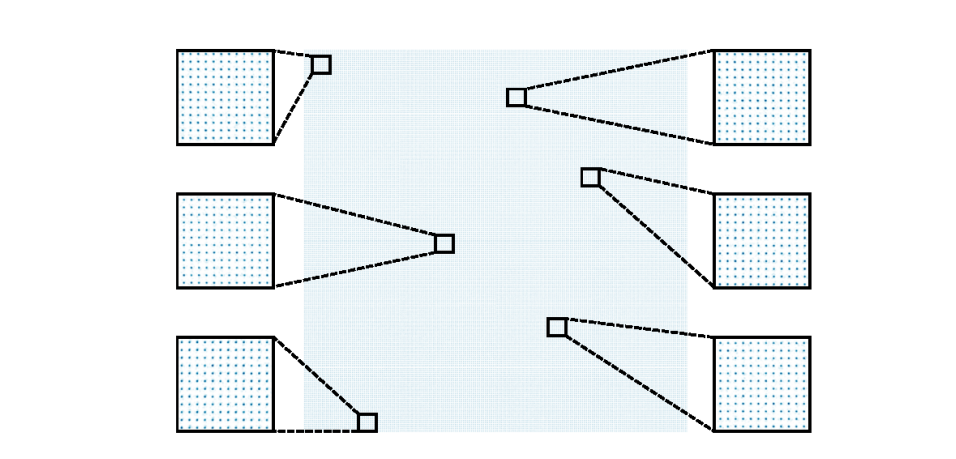
Figure: An optical tweezer array composed of 78,400 optical tweezers generated by a metasurface
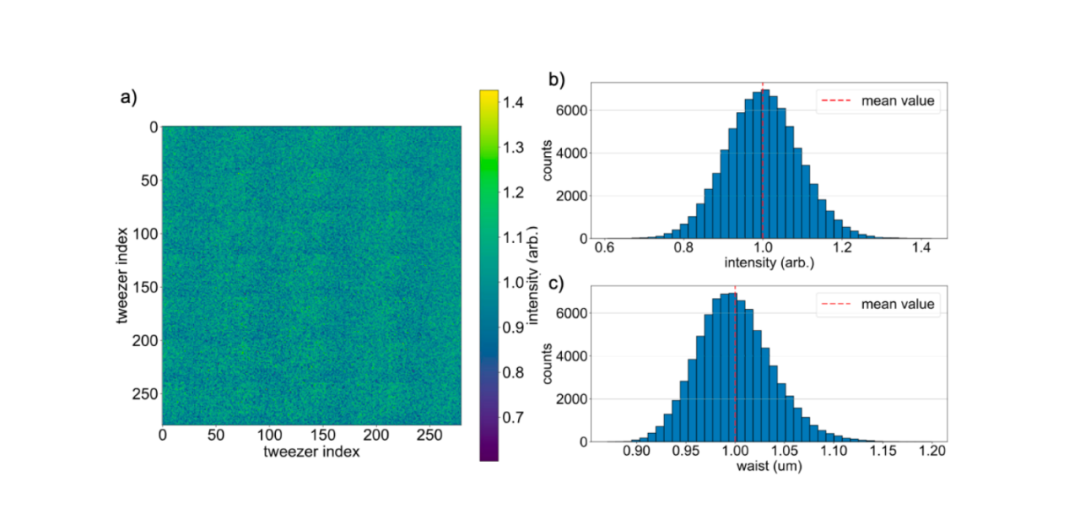
Figure: Performance characterization of the optical tweezer array: a) Distribution map of optical tweezer trap depth, b) Histogram of optical tweezer trap depth distribution, c) Histogram of Airy disk radius distribution
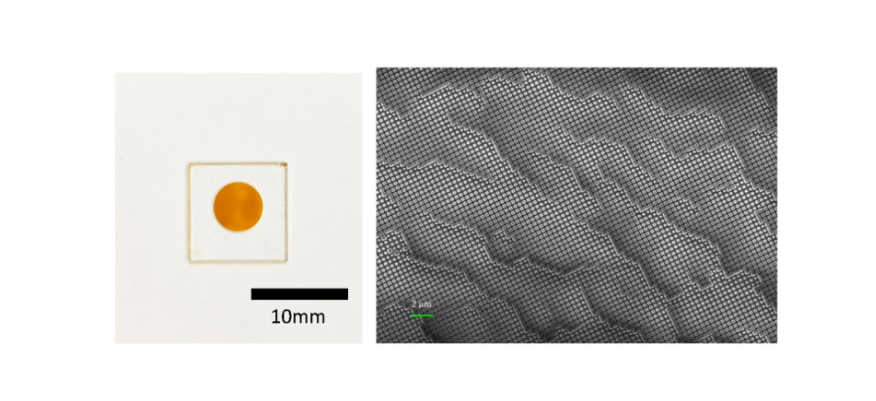
Figure: Optical micrograph of the metasurface and its morphological characterization via scanning electron microscopy
News
Faculty member and student of our lab. Attend CLEO 2026 and Present Research Findings2026-06-01
The 2026 Symposium on Nano-Optoelectronics Marks a Resounding Success2026-05-23
Dr. Kaiyu Cui and Dr. Hao Sun Invited to Present at COINT 20262026-05-19
Ph.D candidate Zhiyao Ma's work about varifocal metalens was published on Advanced Science2026-05-14
Prof. Kaiyu Cui led the team to participate in the Third Applied Physics Conference2026-04-27
A Visit to the Institute of Plasma Physics, CAS Led by Professor Yidong Huang2026-04-25
